📋 Case Studies — Reactor Fact Sheets and Flowsheets
These fact sheets summarise the key technical data for each of the 11 nuclear power plant case studies analysed in Chapter 8. Each sheet covers reactor technology, deployment history, key facts, and links to the detailed SVG flowsheets available on this companion site.
This page is complemented by the one that presents the exergy balances by reactors.
SVG flowsheets are referenced using the same figure numbering as in the book.
🗓️ Publication schedule — New fact sheet published every Tuesday morning.
8.1 — AGR Hartlepool · 625 MWe
United Kingdom · Gas-cooled · Graphite moderated · CO₂ · British design
⚡ Key Parameters
| Parameter | Value |
|---|---|
| Net electric power | 625 MWe |
| Thermodynamic efficiency | 41 % |
| Coolant | CO₂ |
| Steam temperature | 541 °C |
| Steam pressure | 170 bar |
| Feedwater heaters | 8 |
🔬 Reactor Technology
The Advanced Gas-cooled Reactor (AGR) is the British successor to the Magnox reactor. It uses pressurised carbon dioxide (CO₂) as coolant and graphite as moderator. The fuel consists of lightly enriched uranium oxide (2.5–3.5 %) clad in stainless steel, which withstands higher gas temperatures (~650 °C) than Magnox (~400 °C), giving the AGR the highest thermodynamic efficiency (~41 %) among gas-cooled power reactors. The secondary steam cycle includes superheat and reheat with 8 feedwater heaters (FWH).
🏭 Deployment History
| Plant | Country | Units | Power | First power | Shutdown / Status |
|---|---|---|---|---|---|
| Dungeness B | UK | 2 | 2 × 505 MWe | 1983/85 | Shutdown 2021/23 |
| Hartlepool | UK | 2 | 2 × 605 MWe | 1983/84 | Scheduled Shutdown 2028 |
| Heysham 1 | UK | 2 | 2 × 580 MWe | 1983/84 | Scheduled Shutdown 2028 |
| Heysham 2 | UK | 2 | 2 × 615 MWe | 1988/89 | Scheduled Shutdown 2030 |
| Hinkley Point B | UK | 2 | 2 × 480 MWe | 1976 | Shutdown 2022 |
| Hunterston B | UK | 2 | 2 × 490 MWe | 1976/77 | Shutdown 2022 |
| Torness | UK | 2 | 2 × 625 MWe | 1988/89 | Scheduled Shutdown 2030 |
📌 Key Facts
- AGR programme launched in the 1960s; 14 units commissioned between 1976 and 1989, all now permanently shut down or scheduled for decommissioning.
- Net efficiency ~41 %, the highest of all operational gas-cooled or light-water reactors.
- Hartlepool cycle modelled in the book with 8 FWH, superheat and reheat to 541 °C / 539 °C.
- No AGR has ever been exported; the design remains exclusively British.
- Relative economic failure: construction and operating costs significantly exceeded forecasts.
📐 SVG Flowsheets
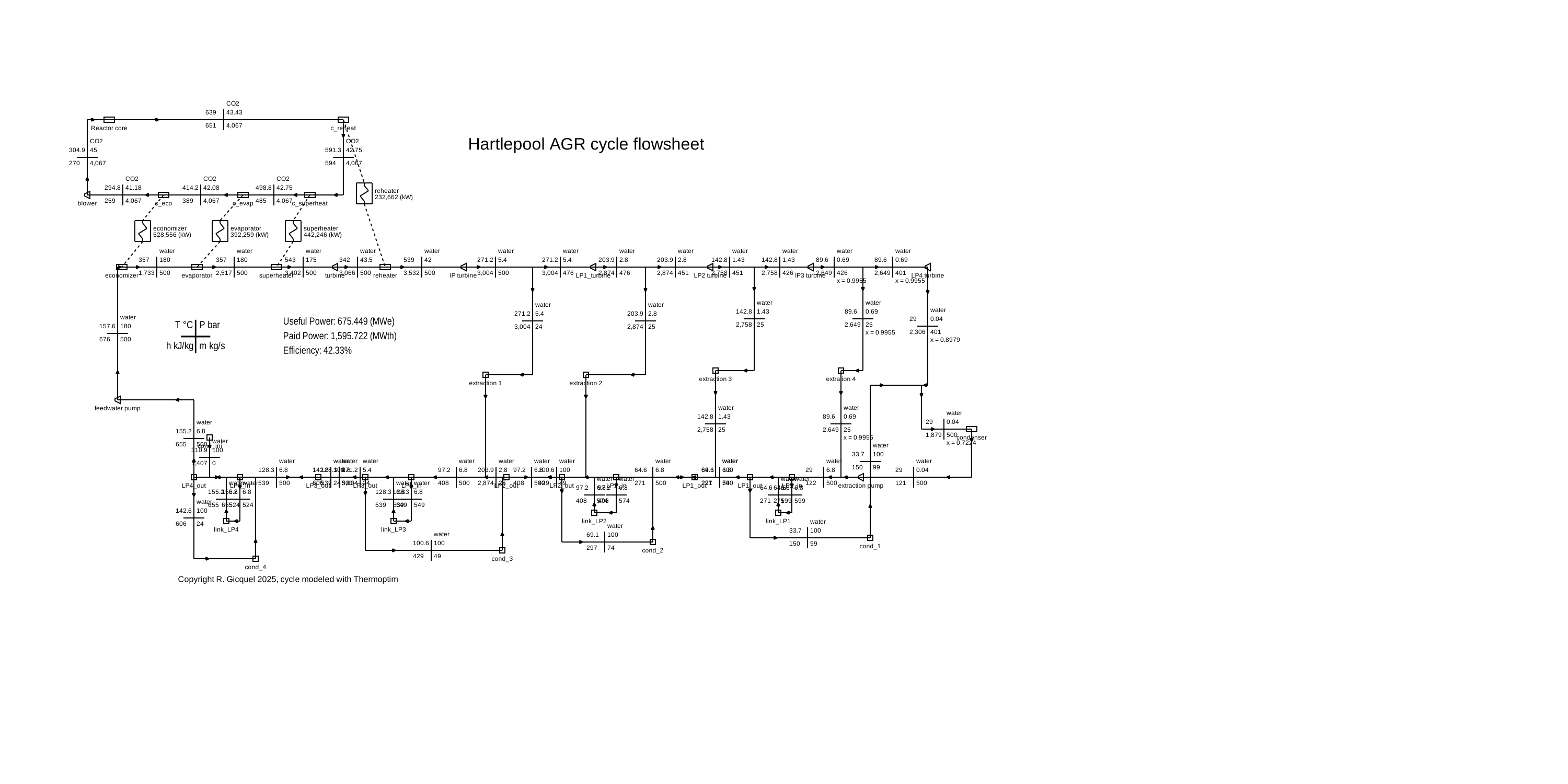
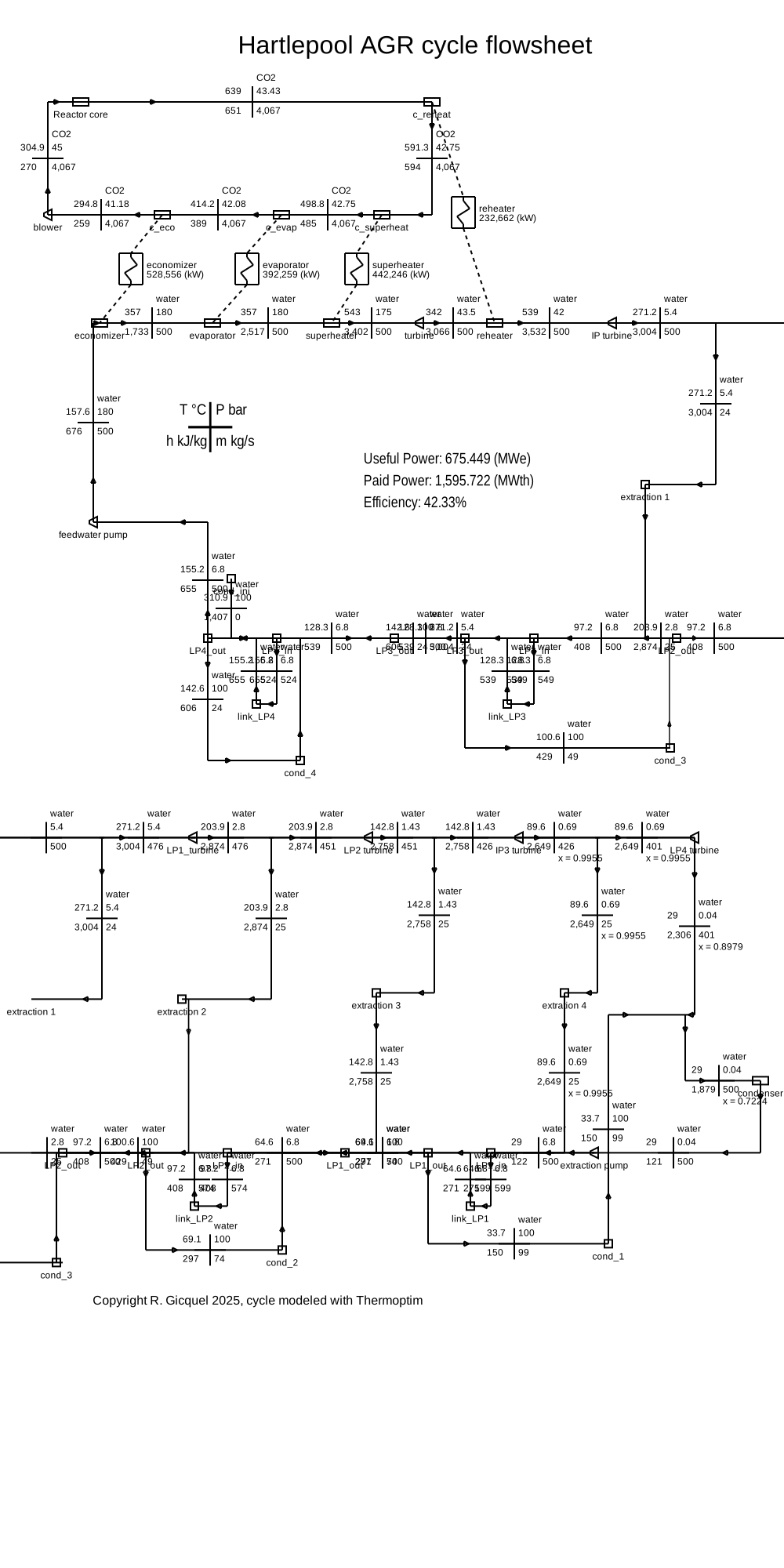
8.2 — NuScale US600 · 50 MWe
USA · SMR · Natural-circulation PWR · Passive safety · NRC certified
⚡ Key Parameters
| Parameter | Value |
|---|---|
| Electric power | 50 MWe / module |
| Total plant output | 600 MWe (12 modules) |
| Thermodynamic efficiency | ~30 % |
| Steam temperature | 300 °C |
| Steam pressure | 34 bar |
| Primary circulation | Natural convection (no pumps) |
🔬 Reactor Technology
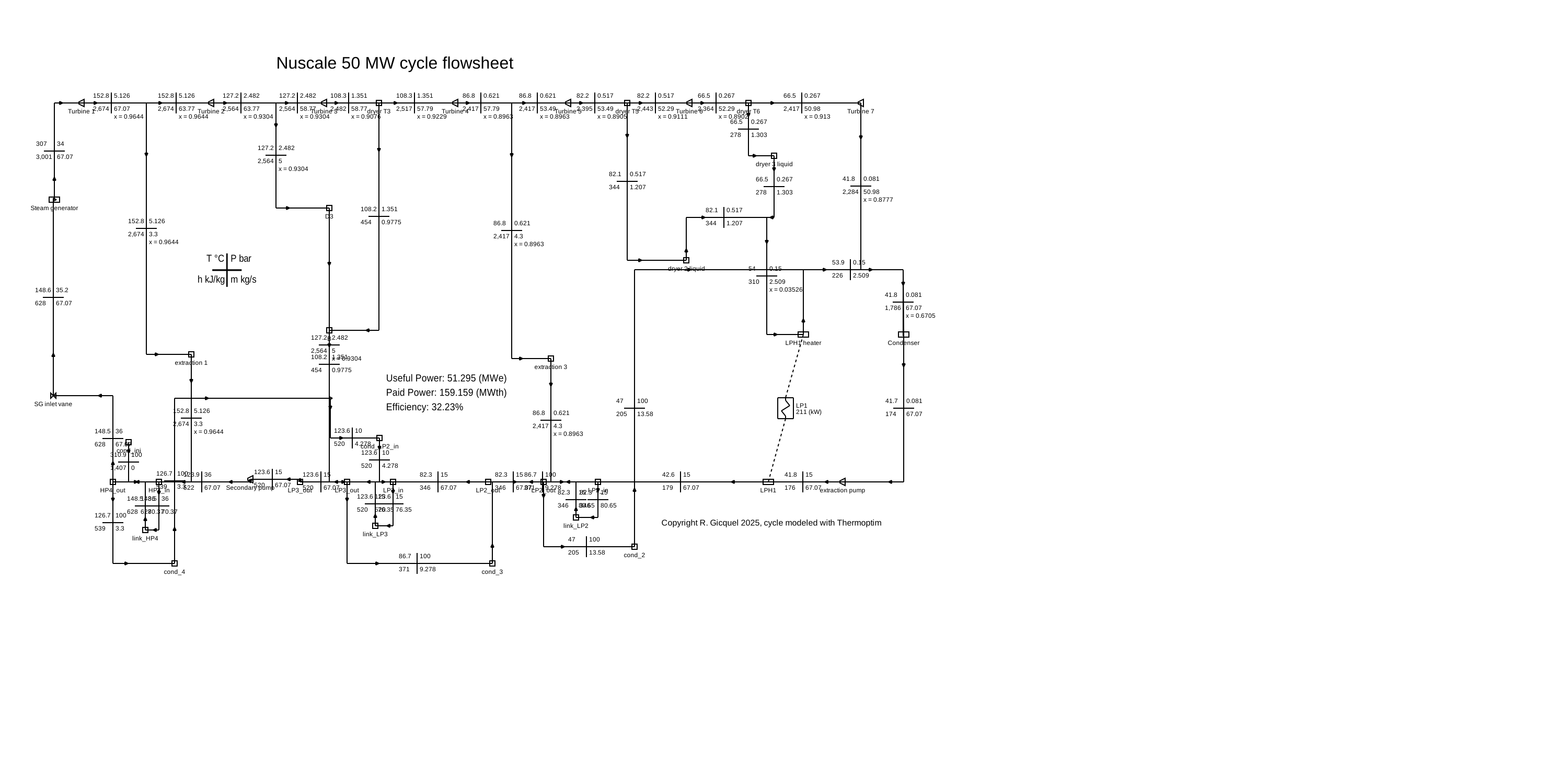
The NuScale Power Module (NPM) US600 is a fully passive Small Modular Reactor (SMR) of the pressurised water type. Its key feature is the integration of the reactor core, helical-coil steam generators, and the pressure vessel within a single compact cylindrical module submerged in a shared underground pool. Primary coolant circulation relies entirely on natural convection — no pumps required. A reference plant uses 12 modules for a total output of 600 MWe. The secondary steam cycle includes feedwater heaters in a simplified configuration compared with conventional PWRs.
🏭 Deployment History
| Plant | Country | Units | Power | Status |
|---|---|---|---|---|
| CFPP (Carbon Free Power Project), Idaho Falls | USA | 6–12 | 300–600 MWe | Cancelled in November 2023 |
📌 Key Facts
- First SMR to receive a Standard Design Approval from the NRC (USA) in 2020.
- The CFPP project (Utah Associated Municipal Power Systems) was cancelled in November 2023 due to rising cost estimates.
- The design integrates the core and steam generators in a single pressurised cylindrical module.
- Fully passive safety: automatic shutdown and cooling without electrical power or human intervention for up to 72 hours..
- The module is fully factory-fabricated and transportable by rail or road.
📐 SVG Flowsheet
8.3 — NuScale US460 · 77 MWe
USA · SMR · Natural-circulation PWR · Passive safety · Gen III+
⚡ Key Parameters
| Parameter | Value |
|---|---|
| Electric power | 77 MWe / module |
| Total plant output | 924 MWe (12 modules) |
| Thermodynamic efficiency | ~30 % |
| Thermal power | 250 MWth / module |
| Primary circulation | Natural convection (no pumps) |
🔬 Reactor Technology
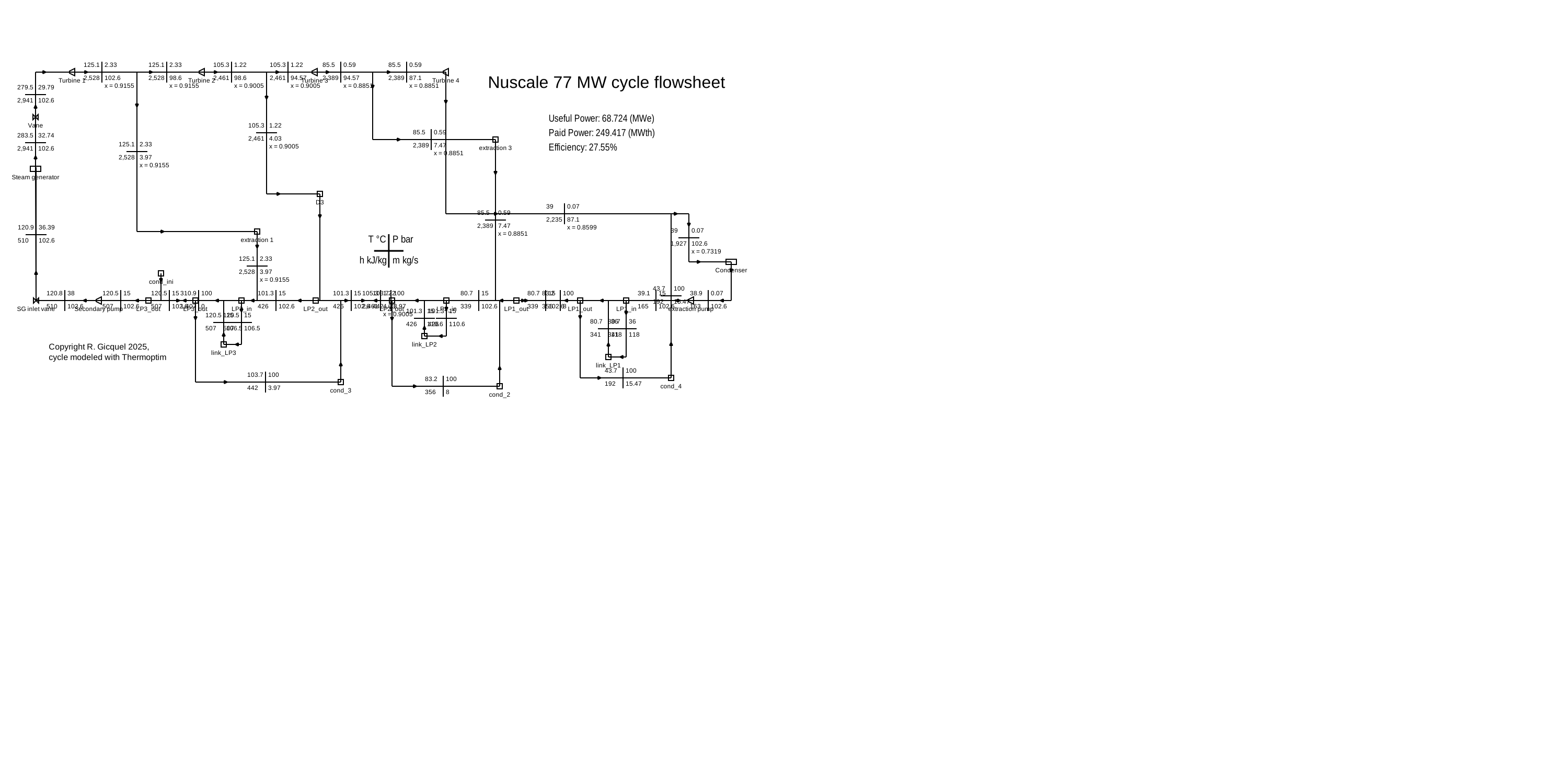
The NuScale US460 is the uprated version of the US600 module. Thermal power per module is increased to 250 MWth (vs 160 MWth for the US600), improving economics of scale while retaining the integrated architecture and natural circulation. The helical-coil steam generator design is optimised for slightly higher steam pressures and temperatures. A reference plant groups 12 modules of 77 MWe for a total of 924 MWe. A new NRC design certification process is underway for the US460.
🏭 Deployment History
| Plant | Country | Units | Power | Status |
|---|---|---|---|---|
| Projects under negotiation (Romania, Poland, etc.) | Multiple | 12 | 924 MWe | 2030s |
📌 Key Facts
- Uprated version of the US600: thermal power per module increased from 160 MWth to 250 (+56 %).
- The 2020 NRC certification for the US600 does not directly cover the US460; a new approval process is under way.
- Cancellation of CFPP in 2023 affected commercial momentum, but NuScale continues development and international contracts.
- Active collaboration with Romania (Doicești), Poland and Bulgaria for 2030+ deployment.
- Shares the integrated architecture and passive safety features of the US600.
📐 SVG Flowsheet
8.4 — ABWR · 1350 MWe
Japan · BWR · Direct cycle · Generation III · GE-Hitachi
⚡ Key Parameters
| Parameter | Value |
|---|---|
| Electric power | 1,350 MWe |
| Thermodynamic efficiency | ~34 % |
| Steam temperature | 288 °C |
| Steam pressure | 69 bar |
| Turbine extraction stages | 11 |
🔬 Reactor Technology
The Advanced Boiling Water Reactor (ABWR) is a Generation III reactor developed by General Electric, Hitachi and Toshiba. Unlike a PWR, the cycle is direct: steam produced in the core feeds the turbines without an intermediate steam generator. Ten internal recirculation jet pumps replace the large external recirculation lines of earlier BWRs. The secondary cycle is complex: a moisture separator–reheater (MSR) between the HP and LP turbines, 11 extraction stages for feedwater heating, and three staged condensate pumps.
🏭 Deployment History
| Plant | Country | Units | Power | First power | Status |
|---|---|---|---|---|---|
| Kashiwazaki-Kariwa 6 & 7 | Japan | 2 | 2 × 1,356 MWe | 1996/97 | In service |
| Hamaoka 5 | Japan | 1 | 1,380 MWe | 2005 | Shut down in 2011 * |
| Shika 2 | Japan | 1 | 1,206 MWe | 2006 | Shut down in 2011 * |
| Lungmen 1 & 2 | Taiwan | 2 | 2 × 1,350 MWe | Under construction | Never commissioned |
| Higashidori 1 | Japan | 1 | 1,385 MWe | Under construction | — |
* Shut down following the Fukushima accident (2011); NRA authorised restart of KK-6/7 in 2023.
📌 Key Facts
- Direct cycle: core steam feeds the HP–LP turbine train directly, with no steam generator.
- The moisture separator–reheater (MSR) between HP and LP removes moisture and reheats steam using live steam.
- 11 extractions for feedwater heaters, fully optimised in the Thermoptim model presented in the book.
- Taiwan’s Lungmen was mothballed at ~80 % completion in 2014 following a political decision.
📐 SVG Flowsheets
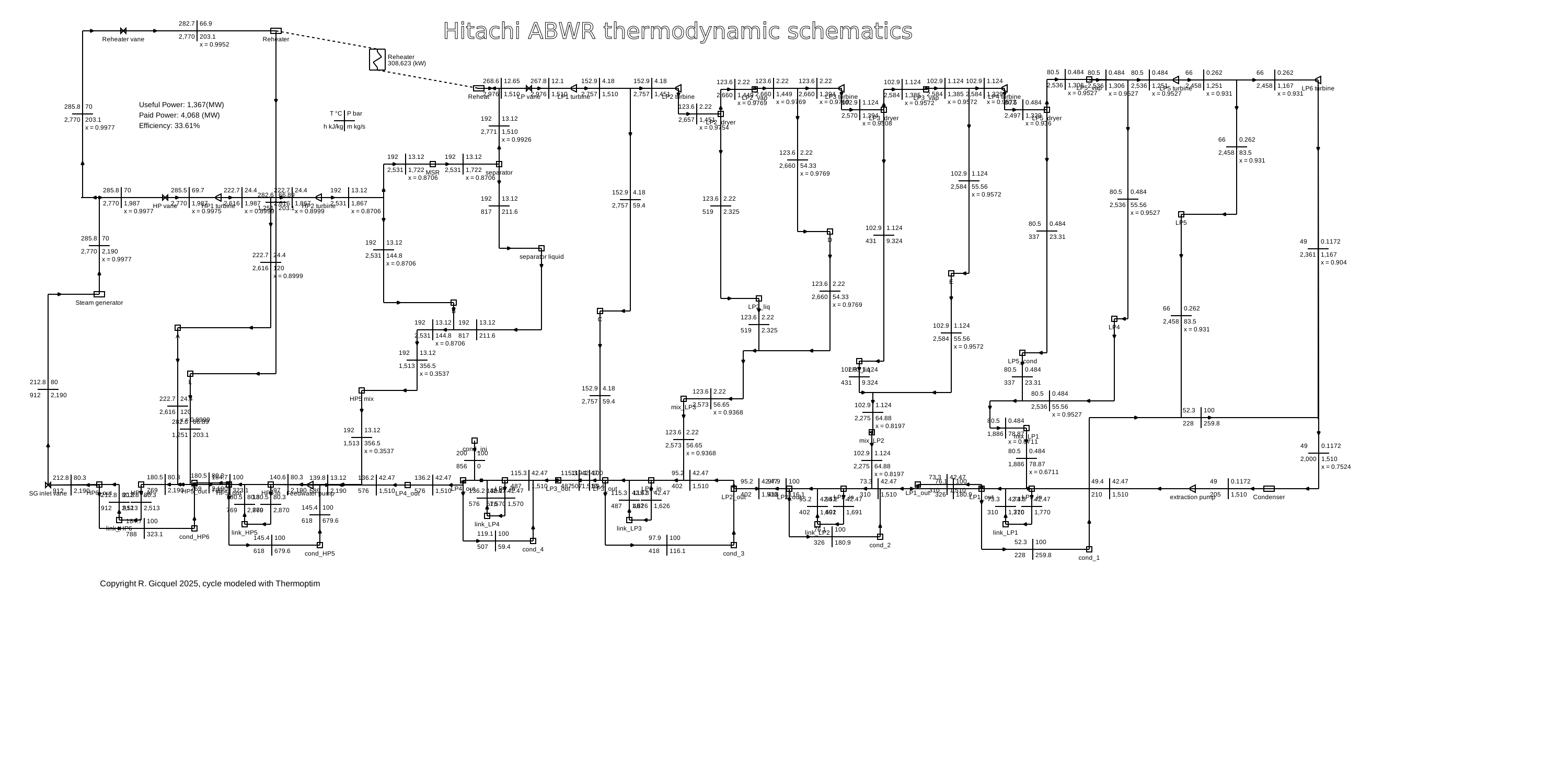
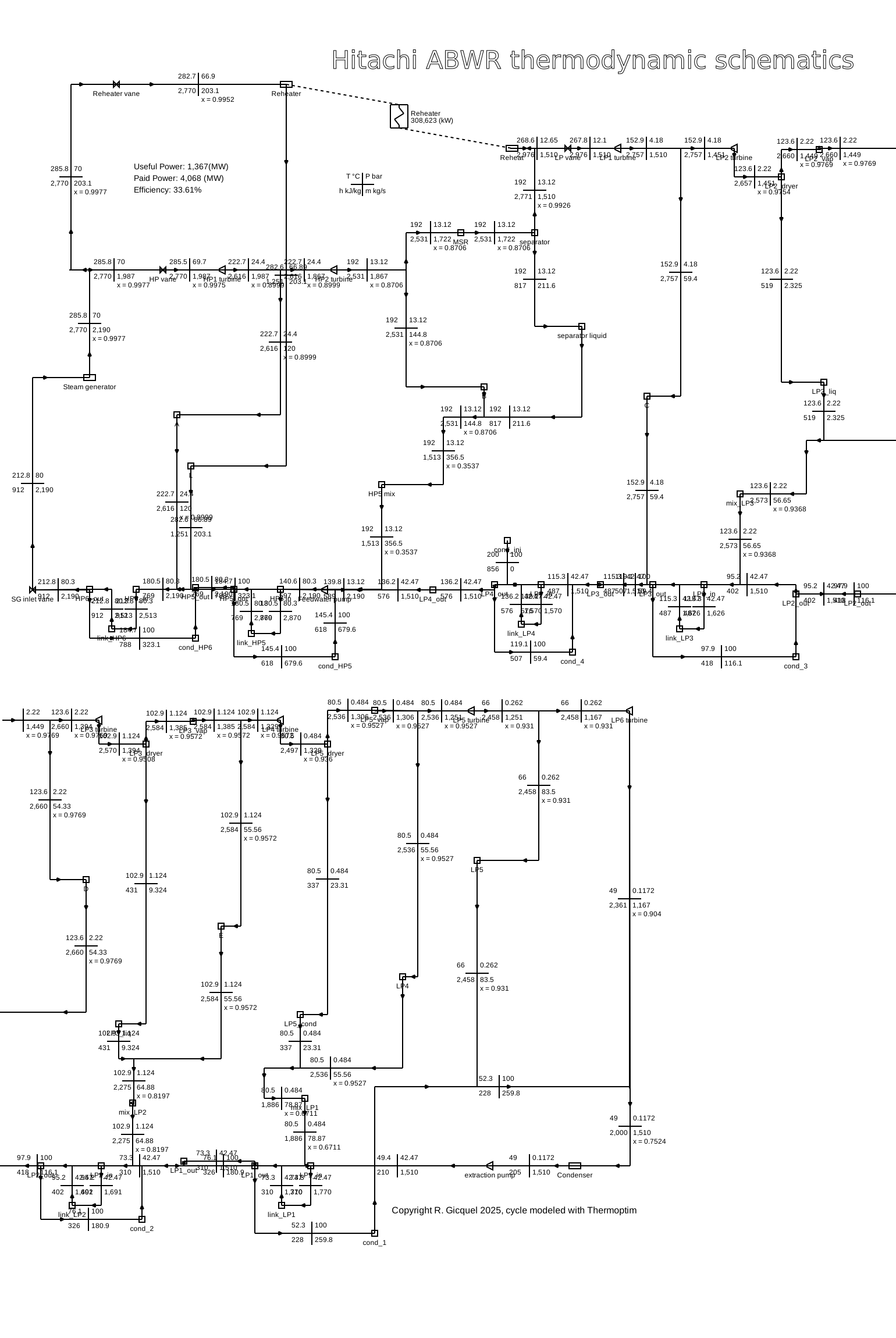
8.5 — RBMK · 1000 MWe
USSR / Russia · Boiling-water graphite channel · Positive void coefficient
⚡ Key Parameters
| Parameter | Value |
|---|---|
| Electric power | 1,000 MWe |
| Thermodynamic efficiency | ~31 % |
| Steam temperature | 284 °C |
| Steam pressure | 65 bar |
| Fuel pressure channels | 1,693 |
🔬 Reactor Technology
The RBMK (Reaktor Bolshoy Moshchnosti Kanalnyy, “high-power channel-type reactor”) is a Soviet boiling-water channel reactor moderated by graphite. Cooling water flows through 1,693 individual pressure tubes passing through a large graphite block. This architecture enables on-load refuelling (no shutdown required) but produces a positive void coefficient at low power, creating a dangerous instability. The thermodynamic cycle includes sealing steam evaporators (to remove impurities before the turbines) and several feedwater-heating stages. Fuel is lightly enriched UO₂ (2 %).
🏭 Deployment History
| Plant | Country | Units | Power | First power | Status |
|---|---|---|---|---|---|
| Leningrad 1–4 | USSR/Russia | 4 | 4 × 1,000 MWe | 1974–75/80–81 | 2019–2021 |
| Chernobyl 1–4 | USSR/Ukraine | 4 | 4 × 925–1,000 MWe | 1977–78/83–84 | 1991–2000 (Unit 4: accident 1986) |
| Smolensk 1–3 | Russia | 3 | 3 × 1,000 MWe | 1982–1990 | In service |
| Kursk 1–5 | Russia | 5 | 1,000 / 1,500 MWe | 1977–2021 | In service (1–2); under constr. (5) |
📌 Key Facts
- The Chernobyl accident (26 April 1986, Unit 4) remains the most severe civil nuclear disaster in history (INES Level 7).
- Positive void coefficient (reactivity increases with steam voids) at low power and low load fraction: the instability responsible for the accident.
- Post-1986 modifications included redesigned control rods (faster insertion), fuel enrichment increased to 2.8 %, and tightened operating procedures.
- Several RBMK units remain in service in Russia (Leningrad, Smolensk, Kursk).
- The cycle uses sealing steam evaporators between the steam drum and the turbines to purge impurities.
- No RBMK has ever been built outside the USSR/Russia.
📐 SVG Flowsheets
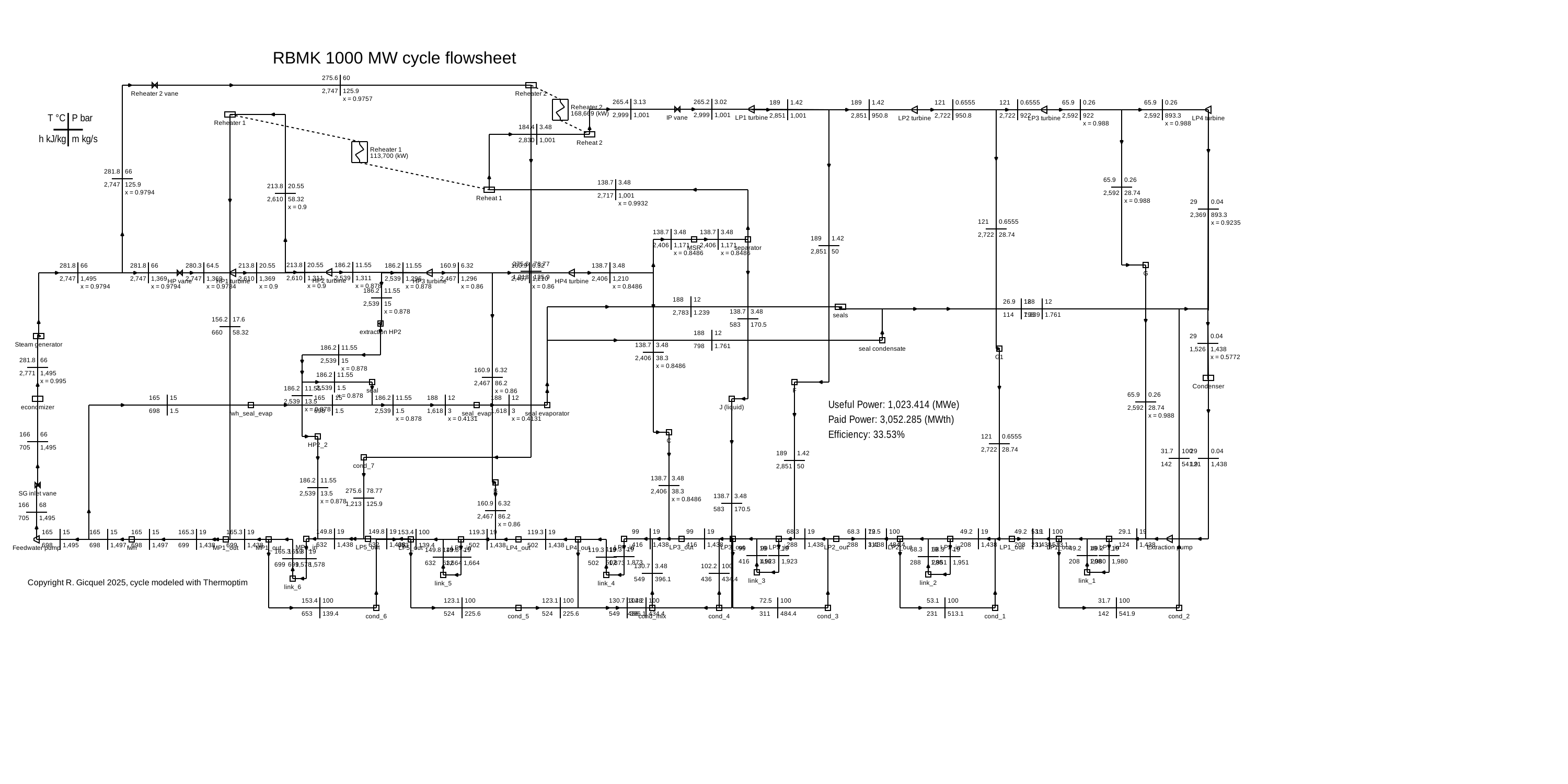
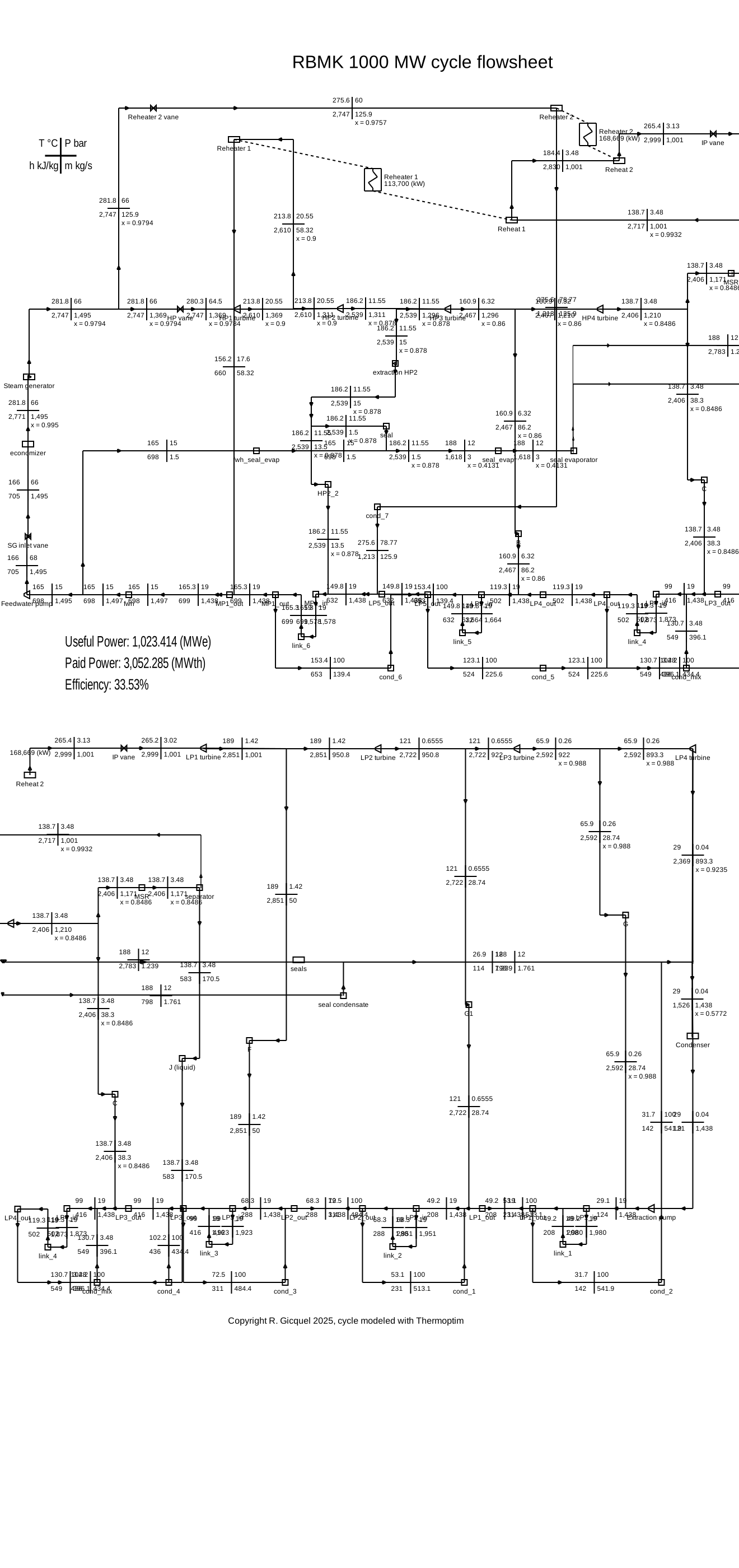
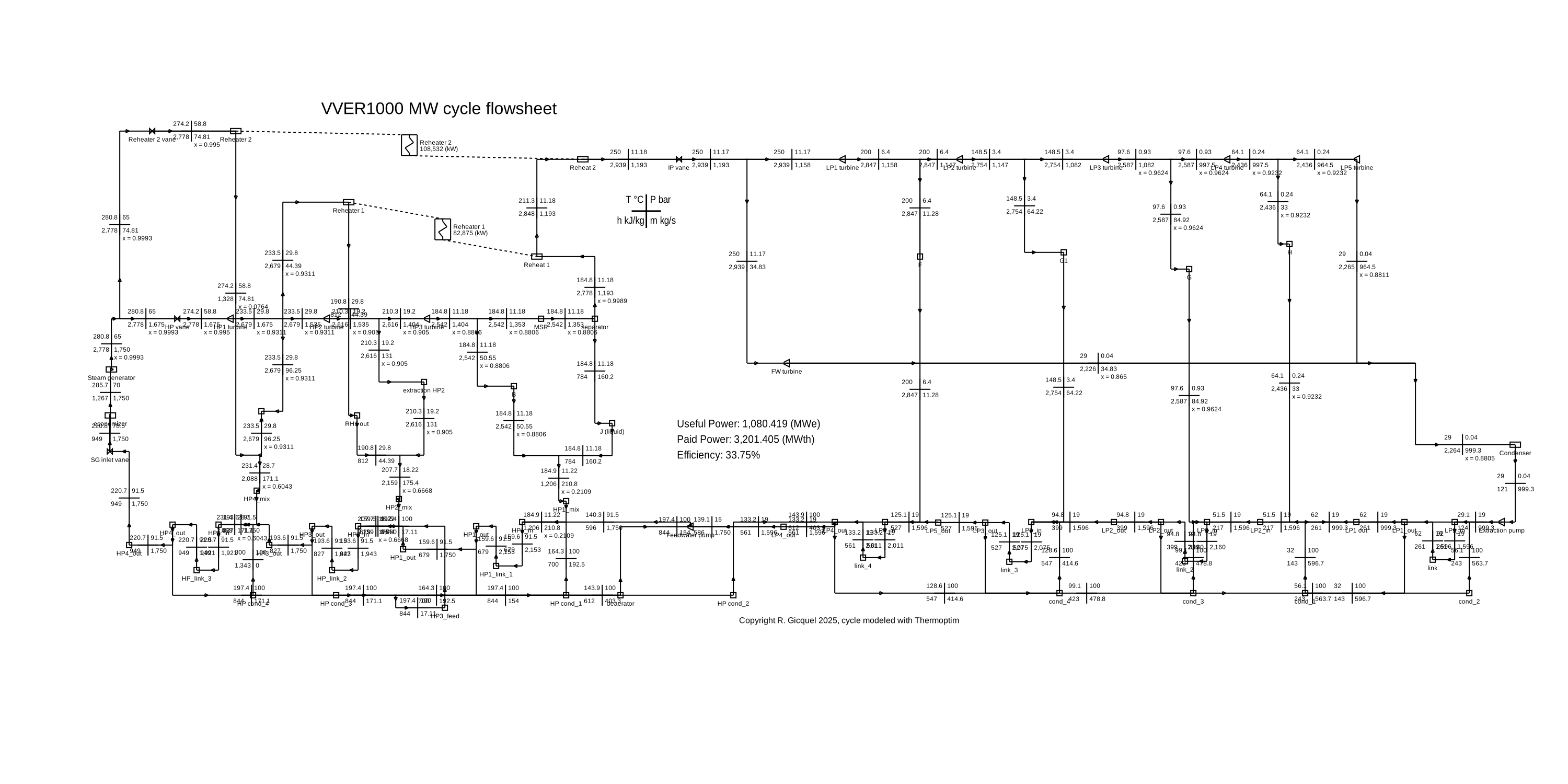
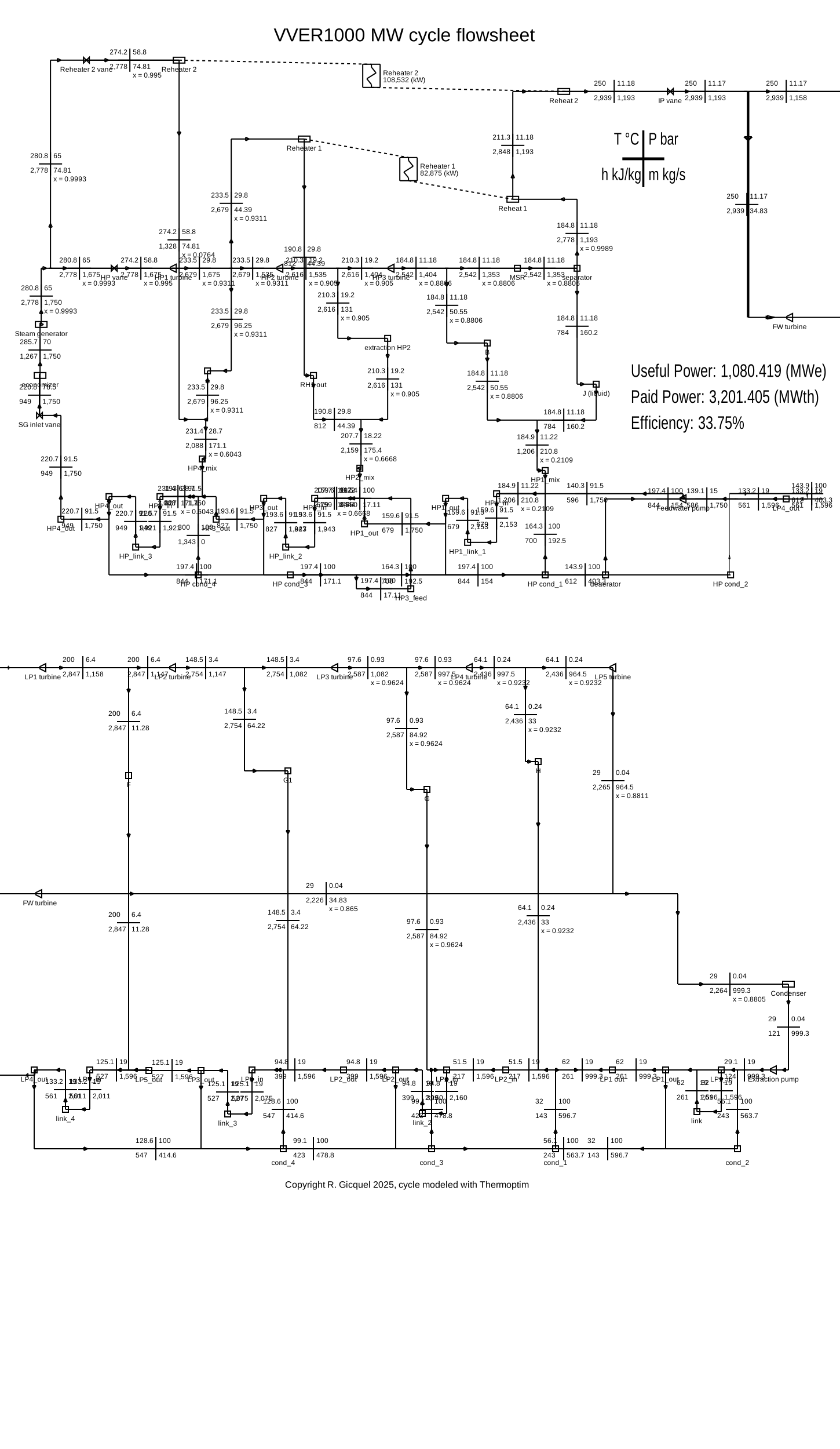
8.6 — VVER-1000 · 1000 MWe
Russia / International · PWR (Russian variant) · Horizontal SG · Rosatom
⚡ Key Parameters
| Parameter | Value |
|---|---|
| Electric power | 950–1,000 MWe |
| Thermodynamic efficiency | ~33 % |
| Steam temperature | 278 °C |
| Steam pressure | 60 bar |
| Steam generators | 4 horizontal (PGV-1000) |
🔬 Reactor Technology
The VVER (Vodo-Vodyanoy Energeticheskiy Reaktor) is the Soviet/Russian pressurised water reactor. The VVER-1000 (model V-320 and successors) differs from Western PWRs in three key respects: hexagonal fuel assemblies rather than square, four horizontal steam generators (PGV-1000) instead of vertical ones, and a more compact primary-loop configuration. The horizontal steam generators offer better transient response. The secondary circuit includes four to five feedwater heaters.
🏭 Deployment History
| Plant | Country | Units | Power | First power | Status |
|---|---|---|---|---|---|
| Novovoronezh 5, Balakovo 1–4, etc. | Russia | ~18 | 950–1,000 MWe | 1980 → | In service |
| Zaporizhzhia 1–6 | Ukraine | 6 | 6 × 950 MWe | 1985–1995 | In service (Russian mil. control since 2022) |
| Temelín 1–2 | Czech Republic | 2 | 2 × 1,000 MWe | 2002/03 | In service |
| Kudankulam 1–2 | India | 2 | 2 × 917 MWe | 2013/16 | In service |
| Akkuyu 1–4 (VVER-1200) | Turkey | 4 | 4 × 1,114 MWe | 2028 → | Under construction |
📌 Key Facts
- Most widely deployed non-Western PWR design: ~50 VVER-1000 units in service worldwide as of 2024.
- Zaporizhzhia is the largest nuclear plant in Europe (6 × 950 MWe); has been under Russian military control since March 2022.
- The successor VVER-1200 (V-491) reaches 1,114–1,200 MWe with passive safety systems (Gen III+).
- Horizontal PGV-1000 steam generators: large heat-exchange area and distinct thermodynamic transient behaviour.
- Hexagonal fuel assemblies: 312 assemblies (vs. ~193 for an equivalent-power Western PWR).
📐 SVG Flowsheets
8.7 — CANDU Pickering · 550 MWe
Canada · PHWR · Heavy water · Natural uranium · On-load refuelling
⚡ Key Parameters
| Parameter | Value |
|---|---|
| Electric power | 515–540 MWe |
| Thermodynamic efficiency | ~30 % |
| Steam temperature | 260 °C |
| Steam pressure | 45 bar |
| Fuel | Natural uranium (0.7 % ²³⁵U) |
🔬 Reactor Technology
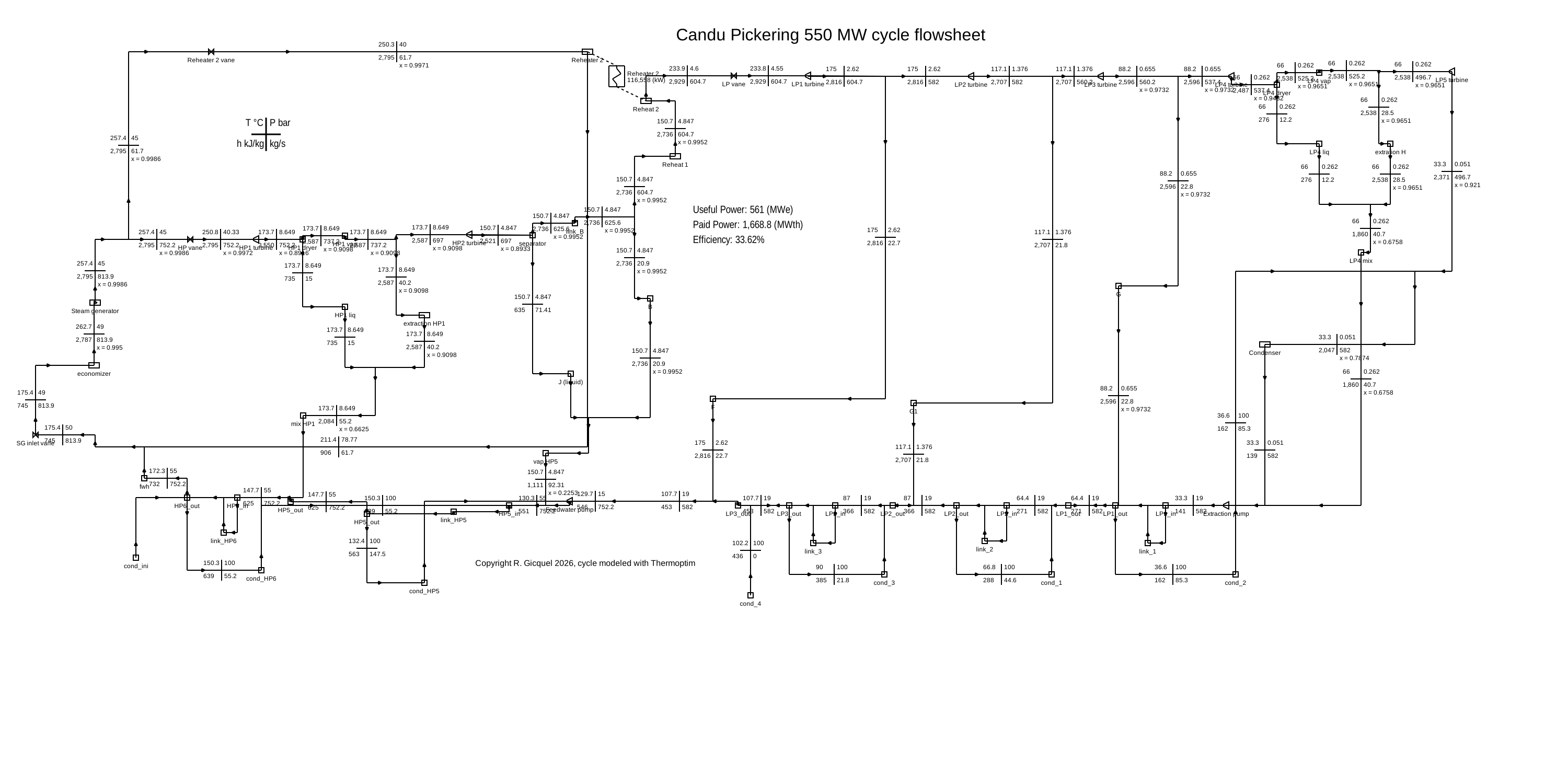
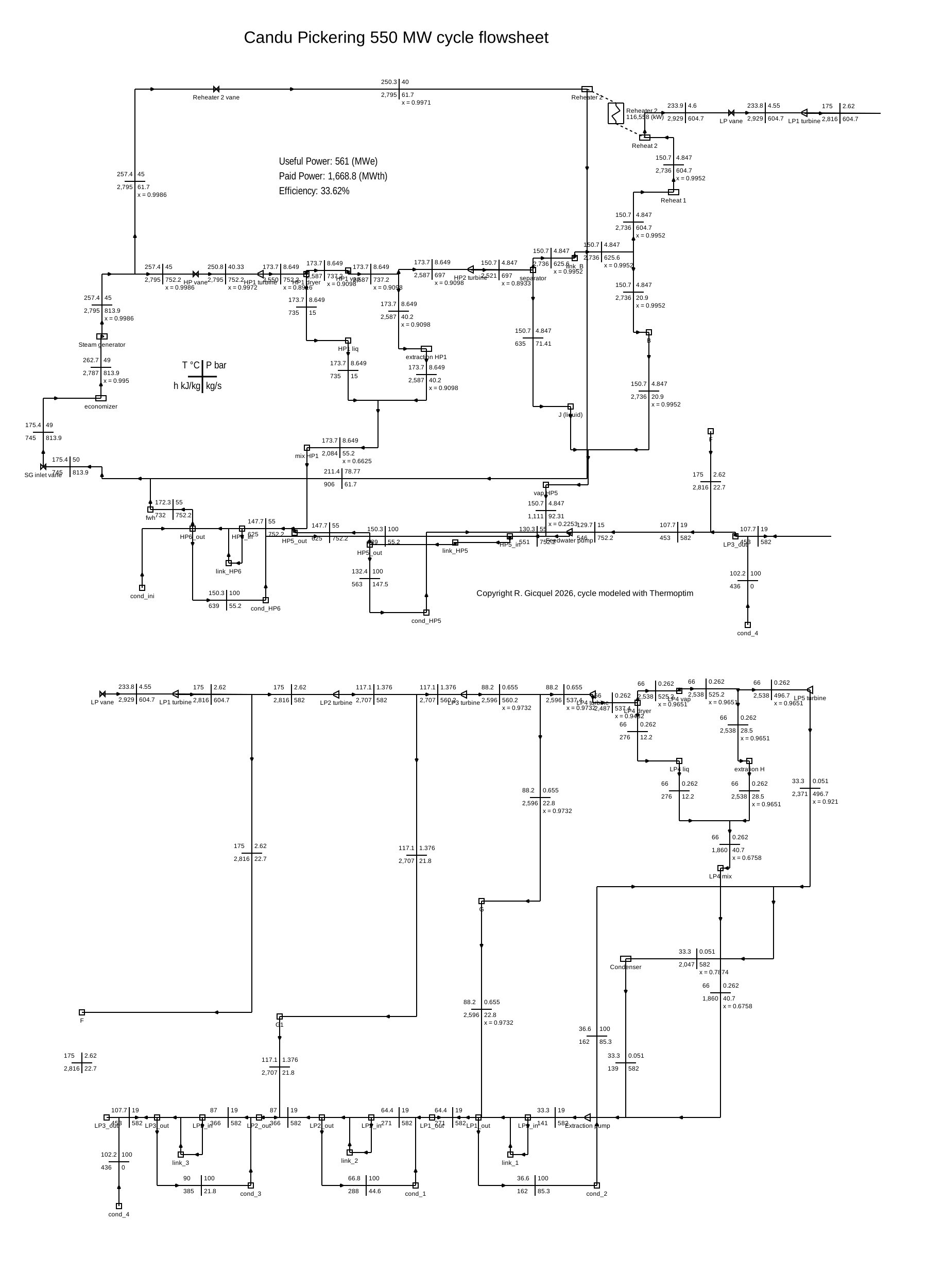
The CANDU (Canadian Deuterium Uranium) reactor uses heavy water (D₂O) as both moderator (in the calandria) and coolant (in pressure tubes). The excellent moderation provided by heavy water allows the use of natural uranium (UO₂) without enrichment — the reactor’s main strategic advantage. On-load refuelling is also possible (no outage required). Low steam conditions (~260 °C, 45 bar), compared with PWRs, yield a lower thermal efficiency (~30 %). The Pickering cycle includes 4 feedwater heaters.
🏭 Deployment History
| Plant | Country | Units | Power | First power | Status |
|---|---|---|---|---|---|
| Pickering A & B (1–8) | Canada (Ontario) | 8 | 4 × 515 + 4 × 540 MWe | 1971–1986 | Planned shutdown during the mid-2020s |
| Bruce A & B (1–8) | Canada (Ontario) | 8 | ~740–800 MWe/unit | 1977–1987 | In service |
| Darlington 1–4 | Canada (Ontario) | 4 | 4 × 878 MWe | 1990–1993 | In service (refurbishment 2016–2026) |
| Wolsong 1–4 | South Korea | 4 | 679–700 MWe/unit | 1983–1999 | Partially in service |
| Rajasthan (RAPS) 1–6 | India | 6 | 100–202 MWe/unit | 1972–2009 | In service |
| Qinshan III 1–2 | China | 2 | 2 × 677 MWe | 2002/03 | In service |
📌 Key Facts
- Key advantage: natural uranium fuel — no enrichment required, simplified fuel cycle.
- On-load refuelling: no annual shutdown for refuelling, high operational availability.
- Fuel flexibility: CANDU can burn thorium, depleted uranium, or MOX fuel.
- Pickering A (units 1–4): first commercial CANDU units (1971); shut down in 2024. Pickering B (units 5–8) remains in service (planned shutdown: mid-2020s).
- Darlington: four units undergoing major refurbishment for an additional 30 years of operation.
- ~50 CANDU/PHWR units in service worldwide (Canada, India, South Korea, China, Romania, Pakistan, Argentina).
📐 SVG Flowsheets
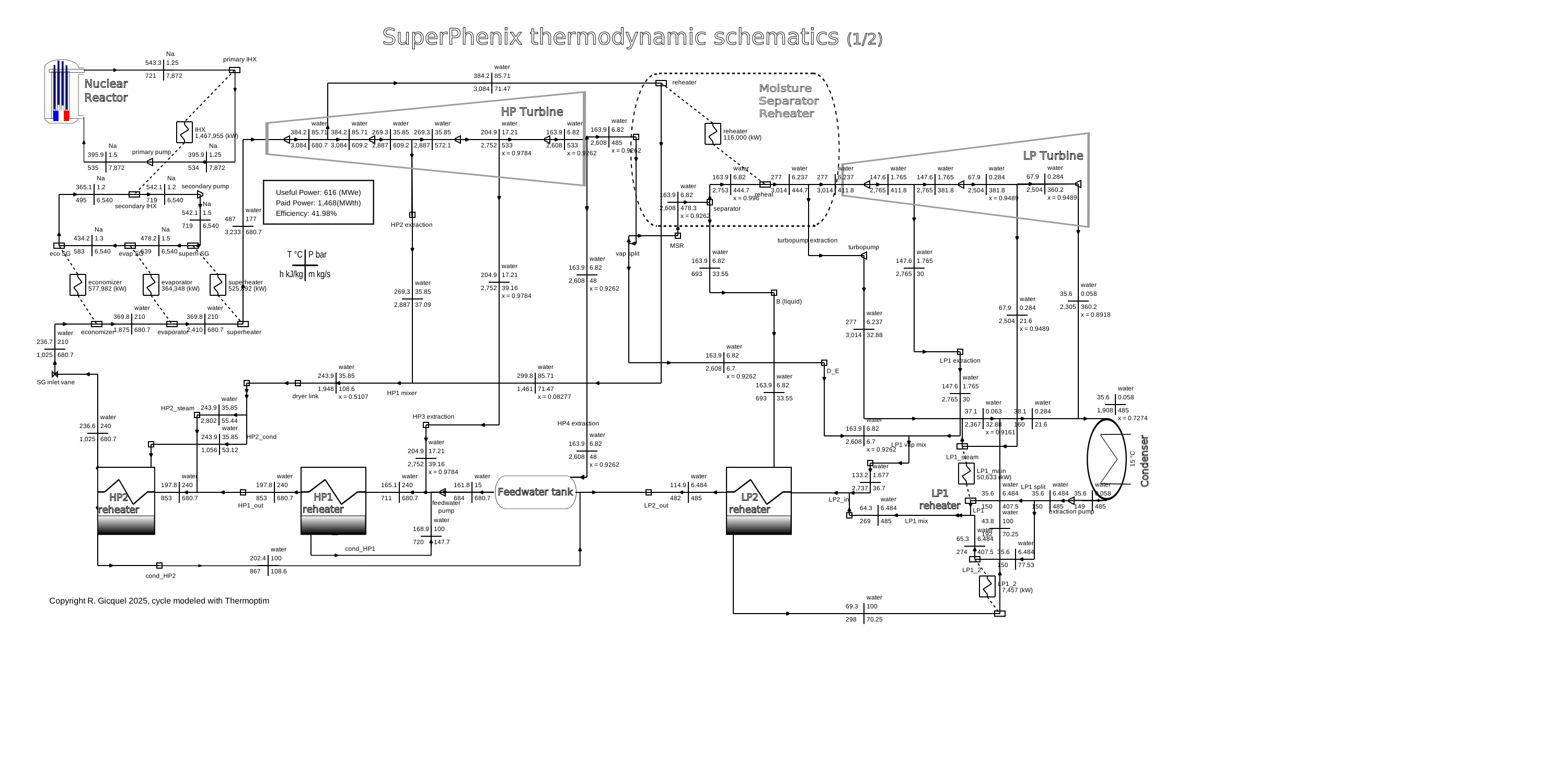
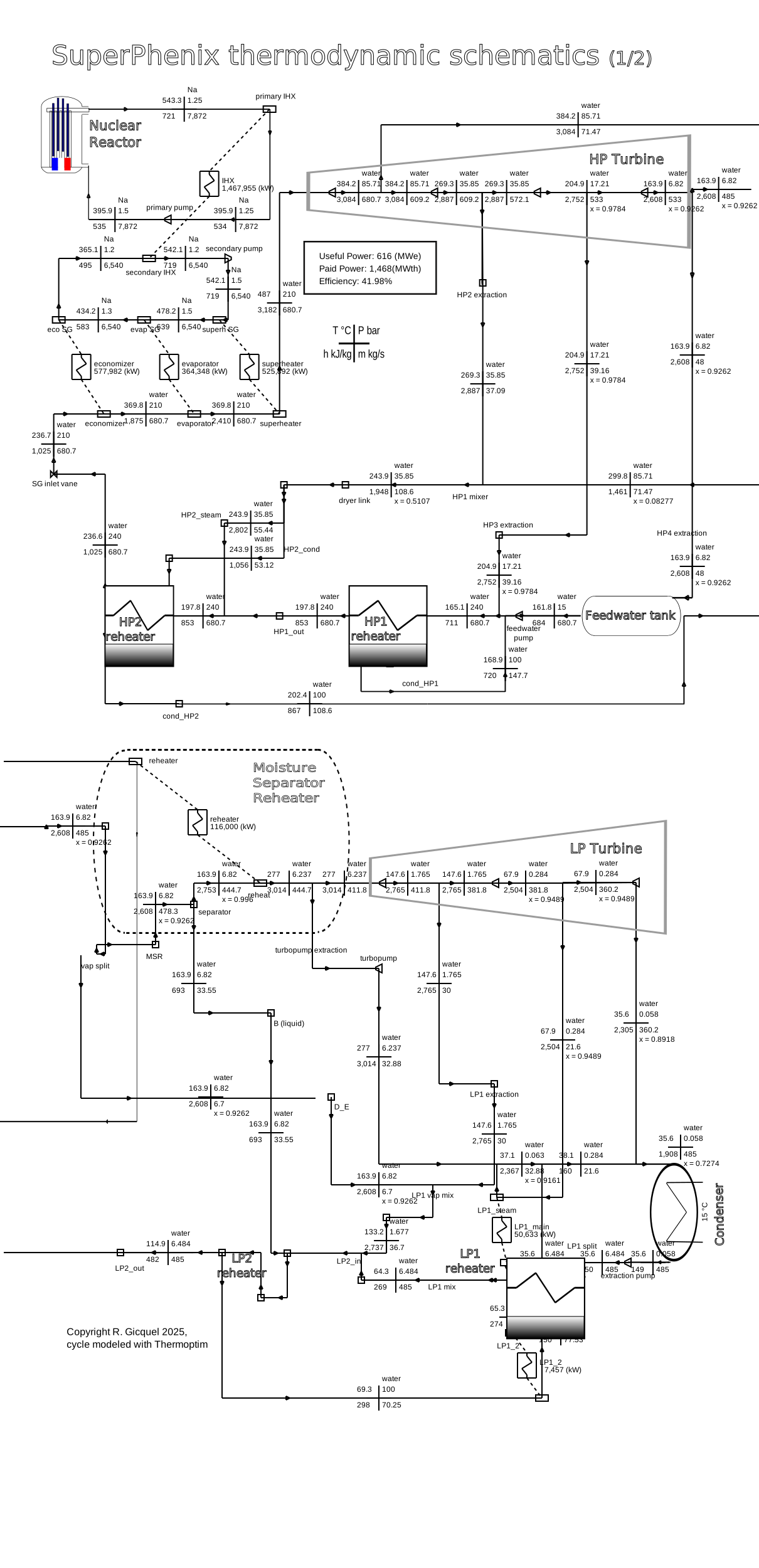
8.8 — Superphénix · 1175 MWe
France · Sodium-cooled Fast Reactor (SFR) · Pool-type · European consortium
⚡ Key Parameters
| Parameter | Value |
|---|---|
| Electric power | 1,175 MWe |
| Thermodynamic efficiency | ~40 % |
| Steam temperature | 487 °C |
| Steam pressure | 177 bar |
| Primary sodium temperature | 545 °C (max) |
🔬 Reactor Technology
Superphénix (SPX) was the most powerful sodium-cooled fast neutron reactor ever built. It uses liquid sodium as coolant without a moderator, giving a fast neutron spectrum. The architecture is pool-type: intermediate sodium–sodium heat exchangers and primary pumps are submerged in the large primary sodium pool (~3,300 t). Secondary sodium feeds the steam generators, which produce steam at high temperature (487 °C), yielding a high thermodynamic efficiency (~40 %). The cycle includes superheating and reheating stages.
🏭 Deployment History
| Plant | Country | Units | Power | First power | Status |
|---|---|---|---|---|---|
| Creys-Malville (Isère) | France | 1 | 1,175 MWe | 1986 (criticality 1985) | Shut down 1997 (government decree) |
📌 Key Facts
- The most powerful SFR ever built and operated: 1,175 MWe / 3,000 MWth.
- Built by a European consortium: EDF (51 %), ENEL (Italy, 33 %), SBK (Germany/Belgium/Netherlands, 16 %).
- Low lifetime availability (~14 %) due to repeated incidents (sodium leaks, sodium contamination) and political opposition.
- Shut down in 1998 by the Jospin government (official decree: December 1997), despite a technically favourable independent review.
- Steam at 487 °C / 177 bar: highly efficient steam cycle, comparable to the best conventional thermal power plants.
- Successor ASTRID (1,500 MWe) was abandoned in 2019; France is now relaunching its fast-reactor programme.
📐 SVG Flowsheets
8.9 — HTR-PM · 200 MWe (model)
China · High Temperature gas-cooled Reactor · Pebble-bed · TRISO fuel
⚡ Key Parameters
| Parameter | Value |
|---|---|
| Electric power | 200 MWe (2 reactors + 1 turbine) |
| Thermodynamic efficiency | 33.76 % |
| Helium outlet temperature | 750 °C |
| Helium pressure | 70 bar |
| Steam temperature | 566 °C |
| Steam pressure | 138 bar |
🔬 Reactor Technology
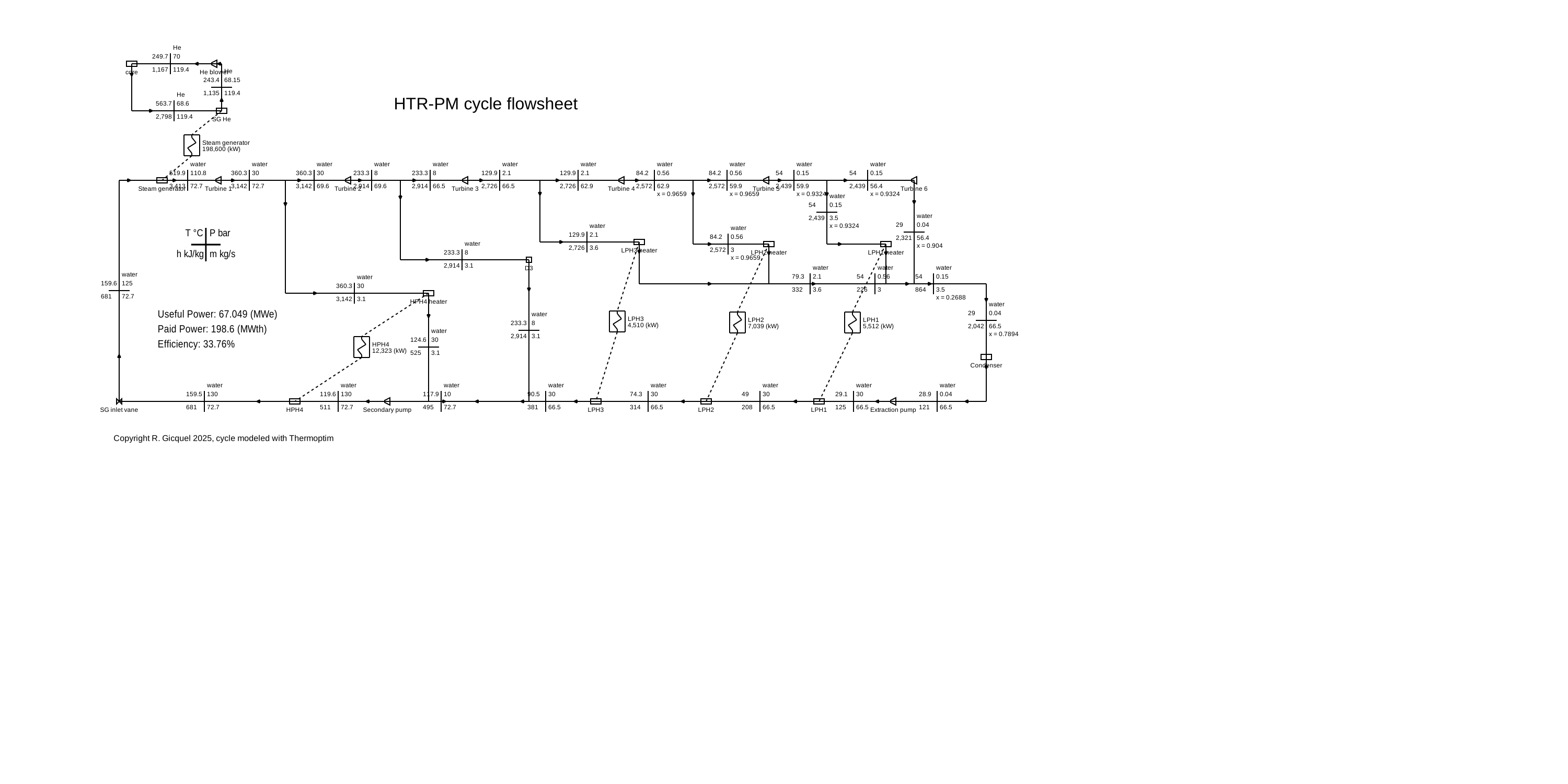
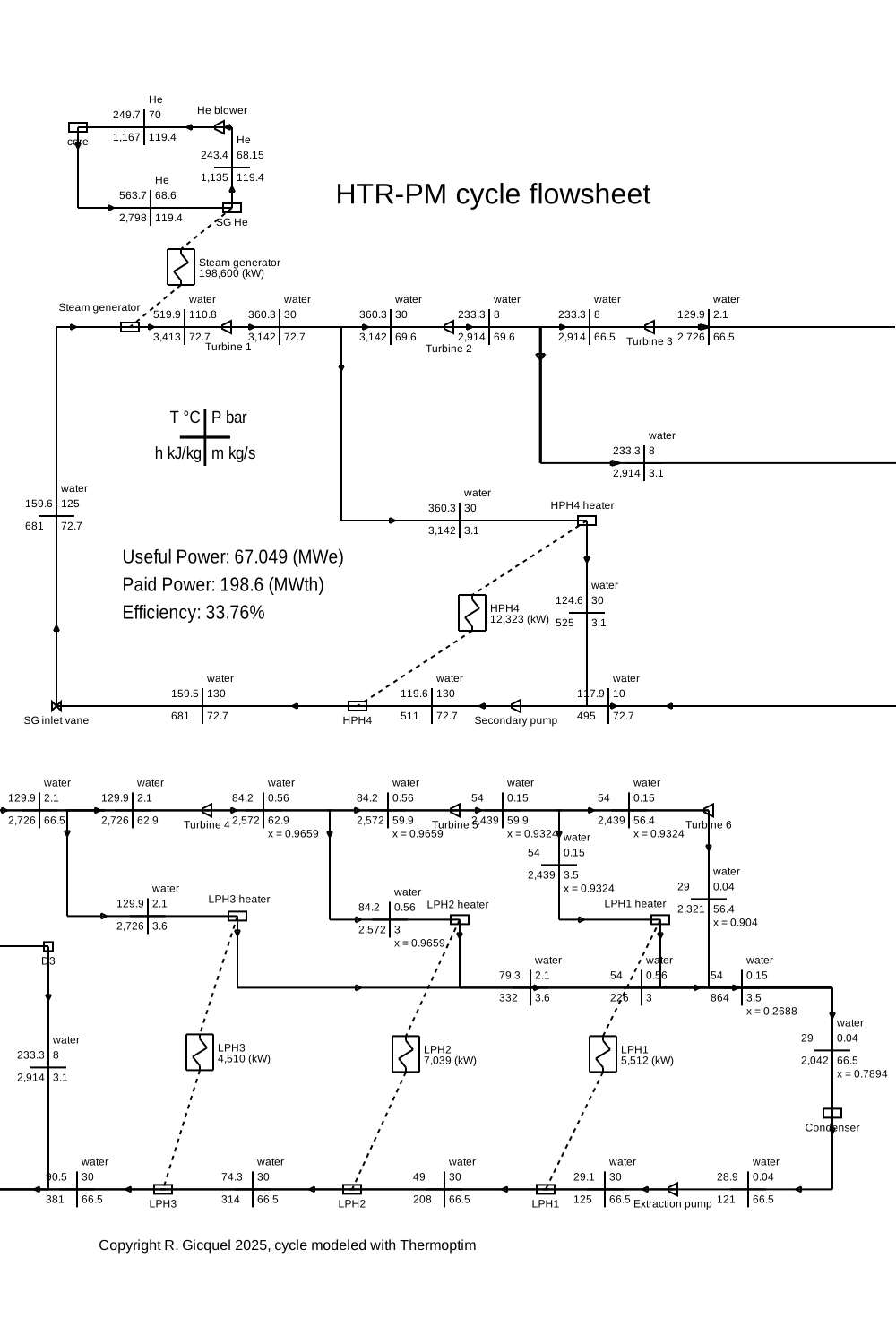
The HTR-PM (High Temperature Reactor — Pebble-bed Module) is a Chinese high-temperature helium-cooled, graphite-moderated reactor. The fuel takes the form of graphite pebbles (6 cm diameter) containing TRISO-coated fuel particles (multi-layer ceramic coating). The Shidao Bay plant pairs two 250 MWth reactors with a single shared steam turbine. Helium at 750 °C feeds a steam generator producing steam at 566 °C / 138 bar, giving a comparatively high thermodynamic efficiency for a graphite-moderated reactor.
🏭 Deployment History
| Plant | Country | Configuration | Power | First power | Status |
|---|---|---|---|---|---|
| Shidao Bay (Rongcheng, Shandong) | China | 2 reactors + 1 turbine | 200 MWe | 2021 (criticality) / 2023 (grid) | In service |
📌 Key Facts
- First commercial HTR power plant in the world (2021–2023), at Shidao Bay, Shandong, China.
- TRISO pebble fuel: inherent containment — no core meltdown possible by design.
- Two HTR-PM250 reactors (250 MWth each) feed a single 200 MWe turbine.
- The achieved efficiency (33.76 %) falls short of the 40 % design target; an HTR-PM600 variant is under study.
- Helium outlet temperature (750 °C) enables high-temperature industrial heat applications (e.g., hydrogen production).
- The HTR-PM600 concept (6 × 250 MWth modules for 600 MWe) is under active study in China.
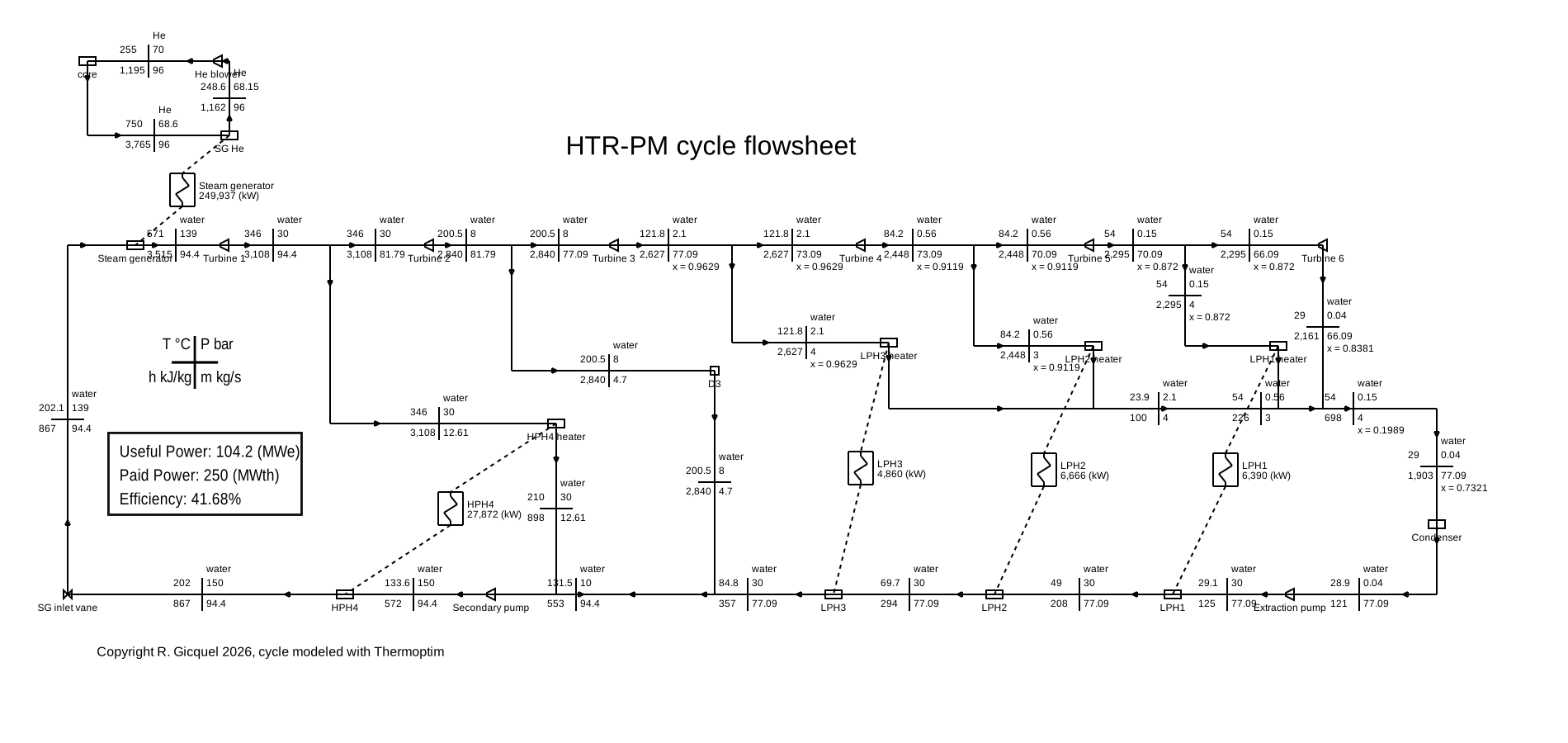
The Shindao Bay Operating Data
Very little information is publicly available about the HTR-PM secondary circuit. The Shindao Bay model presented here was constructed from data visible in Figure 5 of Dong et al. (2025), which shows the Human-Machine Interface (HMI) of the plant’s coordinated control system. This operational dashboard displays helium, steam and feedwater temperatures, core power, electrical output, efficiency, power level, and mass flow rates.
Note: this model has not been validated by the original authors. Despite several requests, it has proven impossible to obtain direct information on the secondary circuit. The extraction pressures and flow rates were assumed; a polytropic efficiency of 70 % was applied to all turbine stages — the value that alone reproduces the announced electrical output of 64 MWe.
The discrepancies are significant. The plant was operating at approximately 80 % of rated power, which partially explains the reduced performance.
We provide here the two models, the first corresponding to the available experimental data, and the second to the nominal performance.
📐 SVG Flowsheets
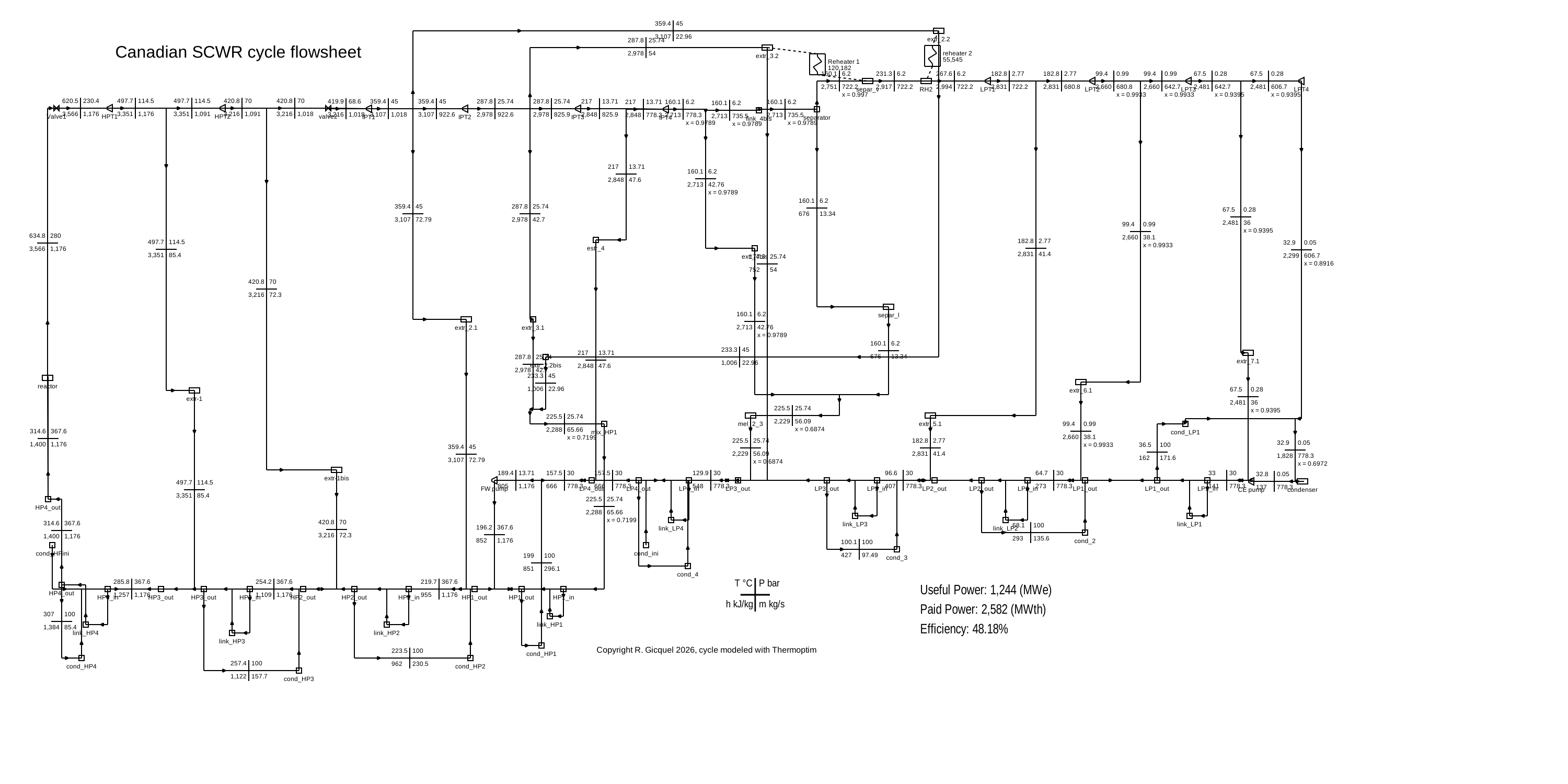
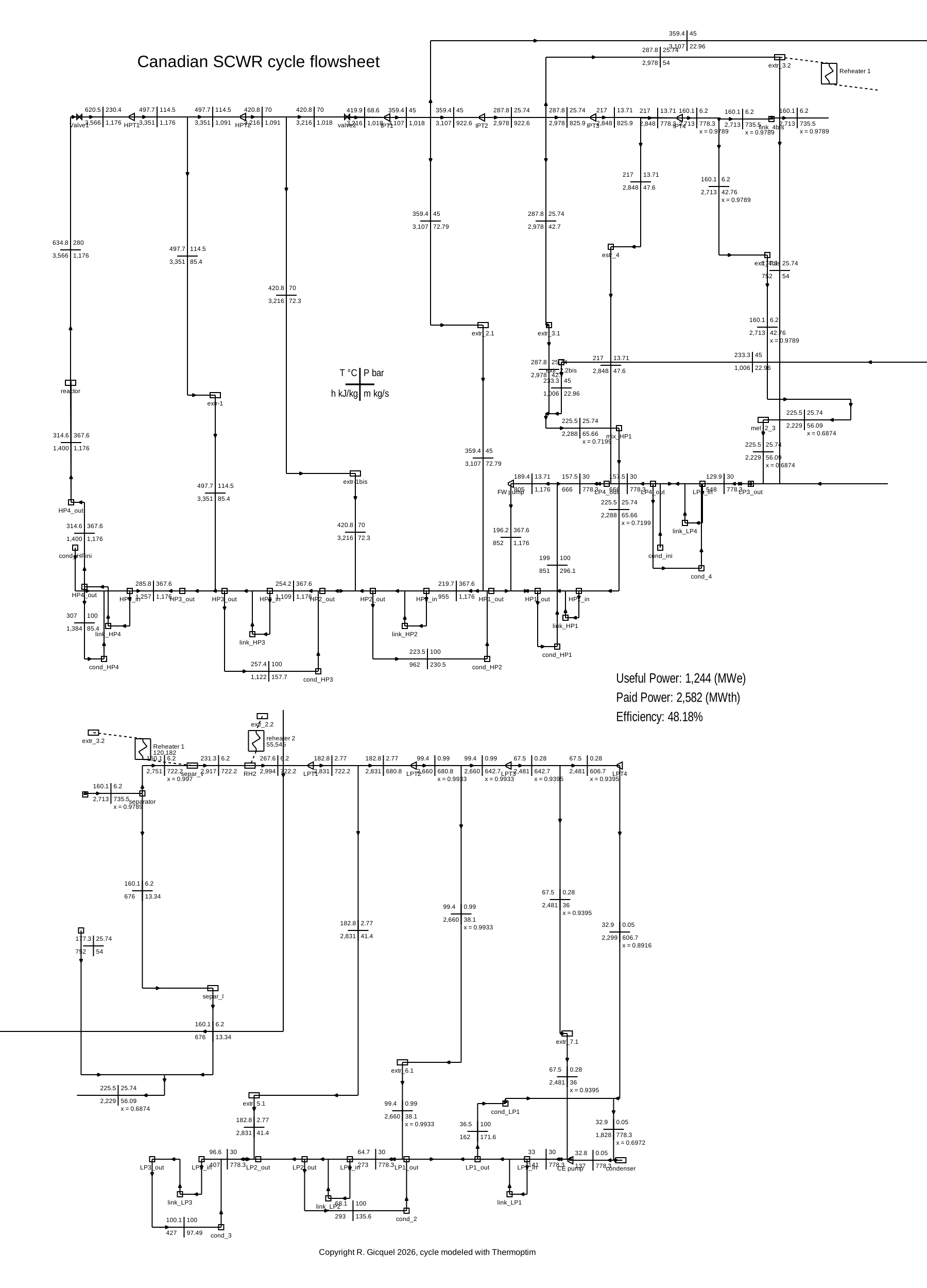
8.10 — Canadian SCWR · 1250 MWe (Concept)
Canada · Supercritical Water-cooled Reactor · Generation IV · GIF concept
Warning
Conceptual design only — This reactor is at the conceptual design stage (TRL ~3–4). No industrial prototype has been built to date. It is the only conceptual design in Chapter 8 that has not yet been built.
⚡ Key Parameters
| Parameter | Value |
|---|---|
| Electric power | 1,250 MWe |
| Thermodynamic efficiency | about 48 % |
| Core outlet temperature | 625 °C |
| Primary pressure | 250 bar |
| Fuel | Enriched UO₂ + Th |
🔬 Reactor Technology
The Canadian SCWR is a Generation IV supercritical water-cooled reactor concept. The coolant is raised above the critical point of water (374 °C, 221 bar) — to 625 °C / 250 bar — which gives it exceptional thermodynamic properties (no phase change, intermediate density). As in a BWR, the cycle is direct: water from the core feeds the turbine directly, with no steam generator. The theoretical efficiency is remarkably high (~48.73 %), rivalling the best combined-cycle gas plants. Moderation is provided by heavy water (calandria) or graphite depending on the variant. The supercritical Rankine cycle includes feedwater heaters and reheating.
🏭 Status
| Item | Details |
|---|---|
| Conceptual design | Studies ongoing since ~2010; no prototype scheduled before 2040+ |
| TRL | ~3–4 |
| Programme | GIF (Generation IV International Forum) — one of six priority concepts |
📌 Key Facts
- Generation IV reactor: selected by the Generation IV International Forum (GIF) as one of six priority concepts.
- Projected thermal efficiency: 48 % — the highest of all concepts studied in the book.
- Direct cycle without a steam generator: supercritical water from the core feeds the turbine directly.
- No liquid–vapour phase transition: supercritical water is a single-phase fluid, eliminating the moisture separator.
- Compatible with thorium/uranium fuel: potential for breeding in a thermal spectrum.
- Open questions remain regarding cladding materials (e.g., zirconium alloys) at 625 °C in supercritical water (current TRL: ~3–4).
📐 SVG Flowsheets
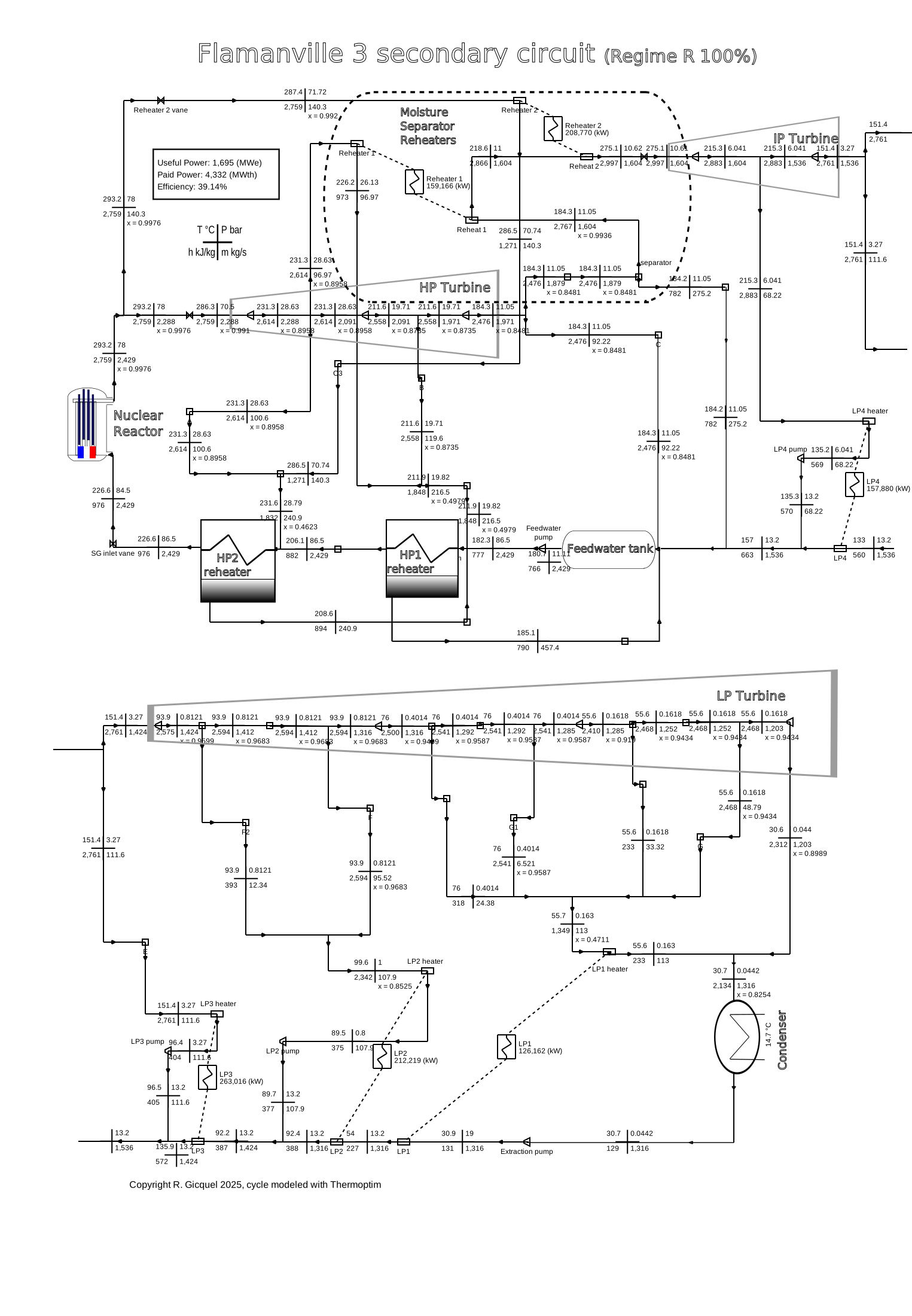
8.11 — EPR Flamanville 3 · 1650 MWe
France / International · PWR Generation III+ · Framatome / EDF
⚡ Key Parameters
| Parameter | Value |
|---|---|
| Net electric power | 1,630–1,650 MWe |
| Thermodynamic efficiency | ~39 % |
| Steam temperature | 294 °C |
| Steam pressure | 78 bar |
| Feedwater heaters | 7 (4 LP + deaerator + 2 HP) |
| Steam generators | 4 |
🔬 Reactor Technology
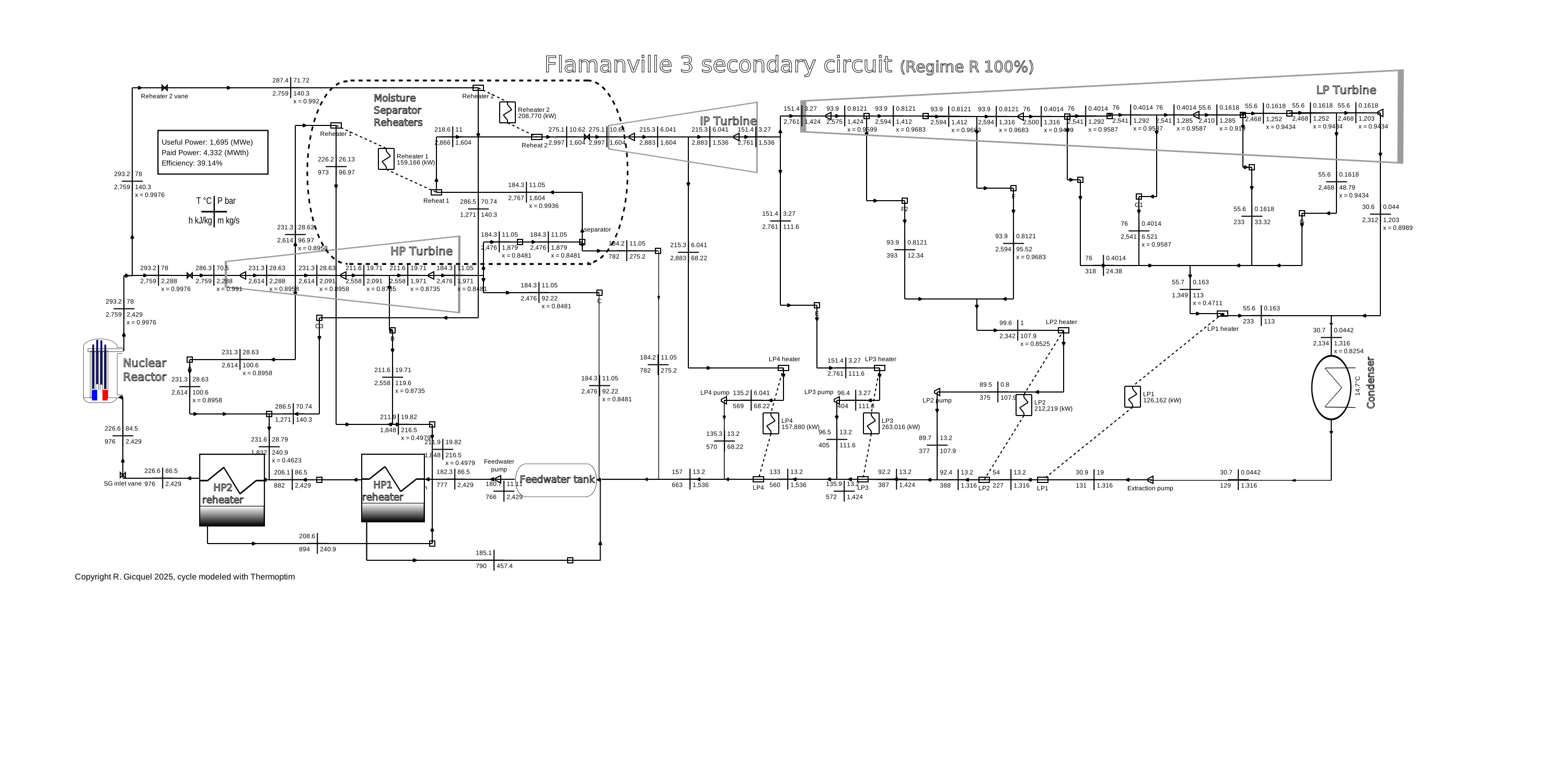
The EPR (Evolutionary Power Reactor) is a Generation III+ pressurised water reactor developed by Framatome and EDF. It differs from earlier French PWR series (900/1300/N4) in four main respects: very high unit power (~1,650 MWe), redundant and diversified safety systems (four 100 %-capacity safety trains), a core melt localisation device (“core catcher”), and a double reinforced-concrete containment. The secondary circuit, fed by four steam generators, includes 8 feedwater heaters. The book presents full off-design modelling (30–100 % load) with external controller — a world first for the EPR.
🏭 Deployment History
| Plant | Country | Units | Power | First power | Status |
|---|---|---|---|---|---|
| Flamanville 3 | France | 1 | 1,630 MWe | 2024 (criticality) / 2025 (commercial) | In service |
| Olkiluoto 3 | Finland | 1 | 1,600 MWe | 2022 (criticality) / 2023 (commercial) | In service |
| Taishan 1 & 2 | China | 2 | 2 × 1,660 MWe | 2018/19 | In service |
| Hinkley Point C 1 & 2 | UK | 2 | 2 × 1,630 MWe | Under construction | 2029–2031 (est.) |
| Sizewell C 1 & 2 | UK | 2 | 2 × 1,630 MWe | Approved 2023 | 2035+ (est.) |
📌 Key Facts
- Flamanville 3: first criticality in 2024, commercial operation expected in 2026, after 17 years of construction.
- Olkiluoto 3 (Finland): commercial operation since May 2023, 13 years behind its original 2009 schedule.
- Taishan 1 & 2 (China): EPRs in continuous commercial service; Taishan 1 was temporarily shut down in 2021 due to fuel-cladding defects (corrosion issues); restarted in 2022.
- Record unit power among PWRs: ~1,650 MWe gross / ~1,600 MWe net.
- Book innovation: first published off-design modelling (30–100 % load) of the EPR secondary cycle.
📐 SVG Flowsheets
How to cite this fact sheet:
For the online version: Gicquel, R. (2026). Case Studies — Reactor Fact Sheets and Flowsheets. s4e2.com. Accessed on [Date].
For the book version: Gicquel, R. (2026). Engineering Thermodynamics: Advanced Modeling of Energy Systems and Nuclear Cycles (Volume 2). Routledge/Taylor & Francis Group. ISBN: 9781032997872.